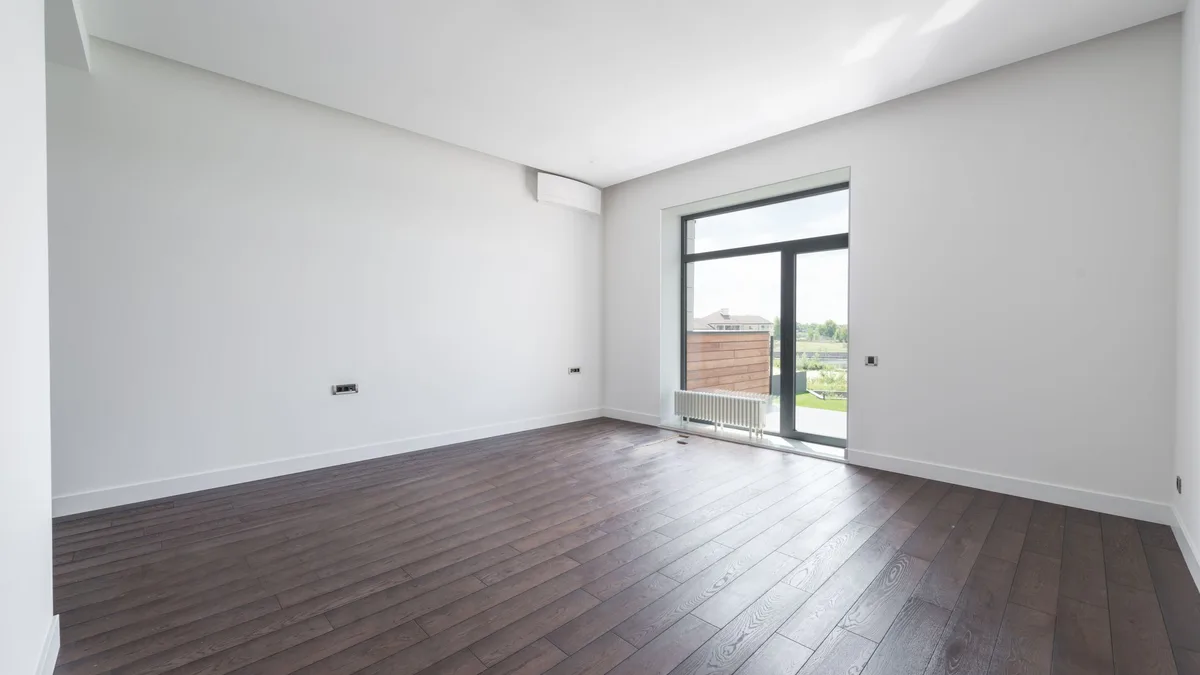
Walk into a room with a new floor and your eye goes to the edges first: where the floor meets the wall, the doorways, the corners. A beautiful plank with a gappy, rough line along the baseboard looks like a cheap job. An ordinary floor with clean, tight trim looks expensive.
Trim is the last part of the job and the part people ask about least at the estimate, then notice most once the floor is down. Here is what it does, the choices you will be asked about, and what to expect.
Why there is trim at the floor at all
Two reasons. The first is looks: no floor meets a wall perfectly, and trim covers the cut edge.
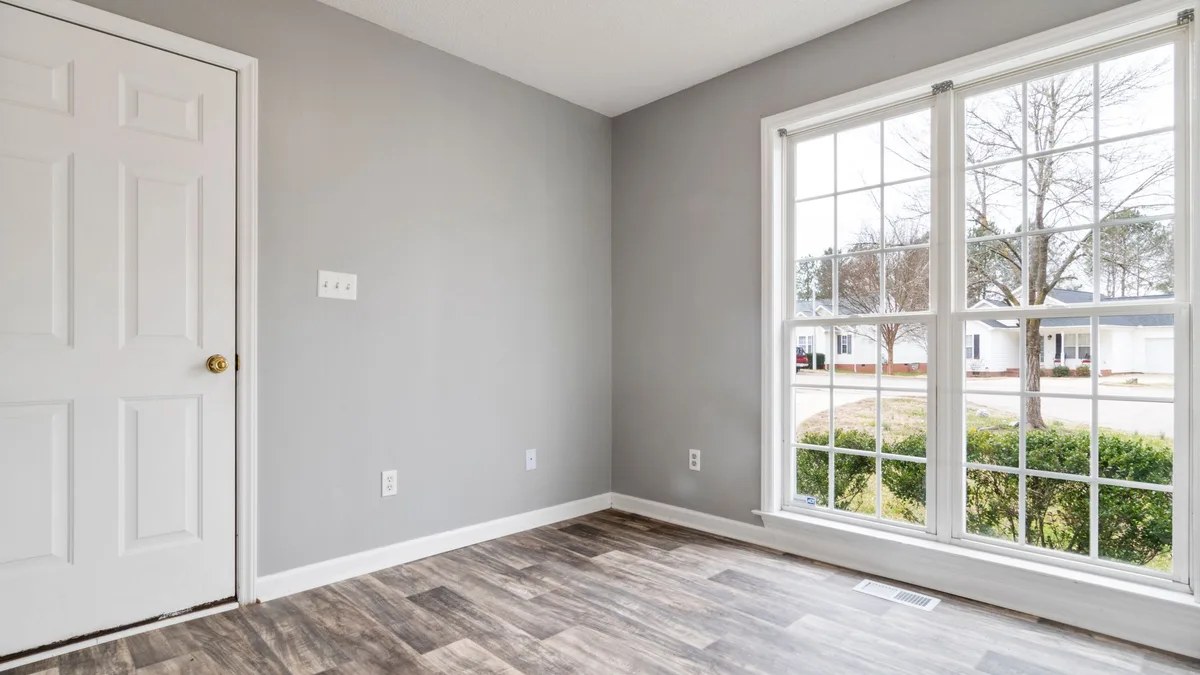
The second is the one people do not expect. Vinyl plank and laminate are usually floating floors. They are not glued or nailed down, and they expand and contract a little as the temperature and humidity change through a Bootheel year. So they are laid with a small gap at every wall. That gap is supposed to be there, and the trim covers it.
That is also why the trim has to be fastened to the wall, not down into the floor. Nailing shoe molding into the plank pins the floor in place, and a floor that cannot move can buckle or separate. Getting your house ready for installation day mentions the gap too, because people often spot it before the trim goes on and think something is wrong.
The three pieces
- Baseboard is the tall board along the bottom of the wall. It is usually already in the house, and on many jobs it stays in place.
- Shoe molding is a thin strip, taller than it is deep, nailed along the bottom of the baseboard to cover the gap at the floor. It sits close to the wall and looks tidy.
- Quarter round does the same job, but it is a true quarter circle, so it sticks out a little farther from the wall. It is common and it works fine. Shoe molding is just a slightly neater look.
Baseboard off, or baseboard left on?
There are two ways to finish a new hard floor at the wall.
Leave the baseboard and add shoe molding. The floor runs up close to the baseboard, the gap is left at the wall, and shoe molding or quarter round covers it. This is the most common approach. It is quicker, and it avoids damaging baseboard that may be hard to match.
Take the baseboard off and set it back on the new floor. The floor runs under where the baseboard was, and the baseboard goes back down over it. No shoe molding is needed, which gives a cleaner, more modern line. It takes more time, and older baseboard does not always come off in one piece.
Which is right depends on the trim you have and the look you want. We will talk it through at the estimate.
Going from carpet to a hard floor
This is where trim most often catches people out. When carpet goes in, it is tucked against the baseboard over a strip of tack strip, and the baseboard is usually set a little higher to leave room for the carpet and pad. Pull the carpet up and put a thinner hard floor down, and there can be a visible gap under the baseboard all the way around the room.
Shoe molding covers it. On some jobs, resetting the baseboard lower looks better. Either way, it should be planned and priced up front. Can new flooring go over the old floor? covers the opposite problem, where a floor that builds up too high makes a low baseboard look buried.
Can the old trim go back on?
Sometimes. If shoe molding or baseboard comes off cleanly and is in good shape, it can go back. Often it does not: shoe molding tends to split when it is pulled, and trim that has been painted over several times can crack along the paint line. Putting damaged trim back looks worse than new.
When only part of a house is getting a new floor, the new trim has to sit next to the old. Profiles get discontinued, so an exact match is not always possible. We will tell you whether we can match it, get close, or whether running new trim along a whole wall or room gives a better result than a near-miss.
What good trim work looks like
- Tight inside corners. A coped joint, where one piece is cut to the shape of the other, stays tight as the house moves. A mitred inside corner tends to open up over the seasons. Coped inside corners are the standard we work to.
- Scribed to the wall. Walls in older houses around Sikeston are rarely straight. Trim cut to follow the actual wall line sits tight along its length instead of leaving a sliver of daylight.
- Nail holes you have to look for. Filled and finished, not a visible row along the wall.
- A clean line at doorways, where the trim meets the door casing and the transition. Floor transitions and doorways covers what happens at the threshold.
Painted trim needs a finishing touch
Painted shoe molding and baseboard usually need a final coat of paint and a bead of caulk along the top edge where they meet the wall once they are in. Ask at the estimate whether your trim will come primed, prefinished or ready for paint, so you know what is left to do when the floor is finished.
Ask about trim at the estimate
Trim is real work and it should be on the written quote, not a surprise. Stairs and trim explains how we handle it. At a free in-home estimate we look at your baseboard, measure the rooms, and tell you whether your trim can stay, go back, or should be replaced. Book one here or call 573-471-8700. We are on Virginia Street in Sikeston and work across the area, including Portageville, Gideon and Lilbourn.