Skip to content
Stairs & Trim

Stairs & Trim

Stairs and trim are the difference between a floor that has been installed and a floor that has been laid down. Anyone can cover the middle of a room. The finish carpentry at the edges — the stair nosings, the shoe mould, the transitions in every doorway, the scribe against an out-of-square wall — is what your eye actually reads when you walk in. It is the slowest part of the job and it is where most of the skill is, which is why we quote it as real work rather than burying it as an afterthought.

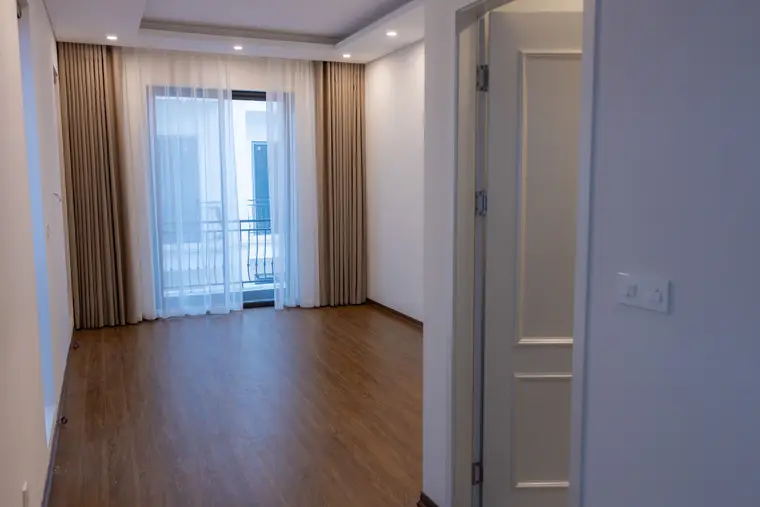
Cozy stair treads and trim in a stairs
Why it matters

The edges are what you see

Nobody looks at the middle of the floor

When you walk into a finished room your eye goes to the perimeter, the doorway and the stairs. That is where a floor either looks deliberate or looks approximate. A beautiful plank with a sloppy shoe mould and a gappy threshold reads as a cheap job, and an ordinary floor finished properly reads as an expensive one.

This is the part of the trade that takes the longest to learn and the part customers are least often shown. We would rather explain it at the estimate than have you wonder why the trim line on the quote is not trivial.

Old houses are not square

In the older housing around Sikeston, Cape Girardeau and the railroad towns, walls are rarely straight and corners are rarely ninety degrees. A trim piece cut square and pushed into a wall that bows will leave a wedge of daylight along its length.

The answer is scribing — transferring the actual wall line onto the piece and cutting to that instead of to a theoretical straight edge. It takes longer per piece and it is the only way to get a tight line in a house that has moved over a century.

What's included

  • Stair treads, risers and nosings fitted to each step
  • Shoe mould and quarter round matched to existing profiles
  • Transitions between rooms and between floor heights
  • Scribed cuts against out-of-square walls
  • Carpeted, planked and mixed staircases
What we do

Stairs, thresholds and everything at the edges

Staircases

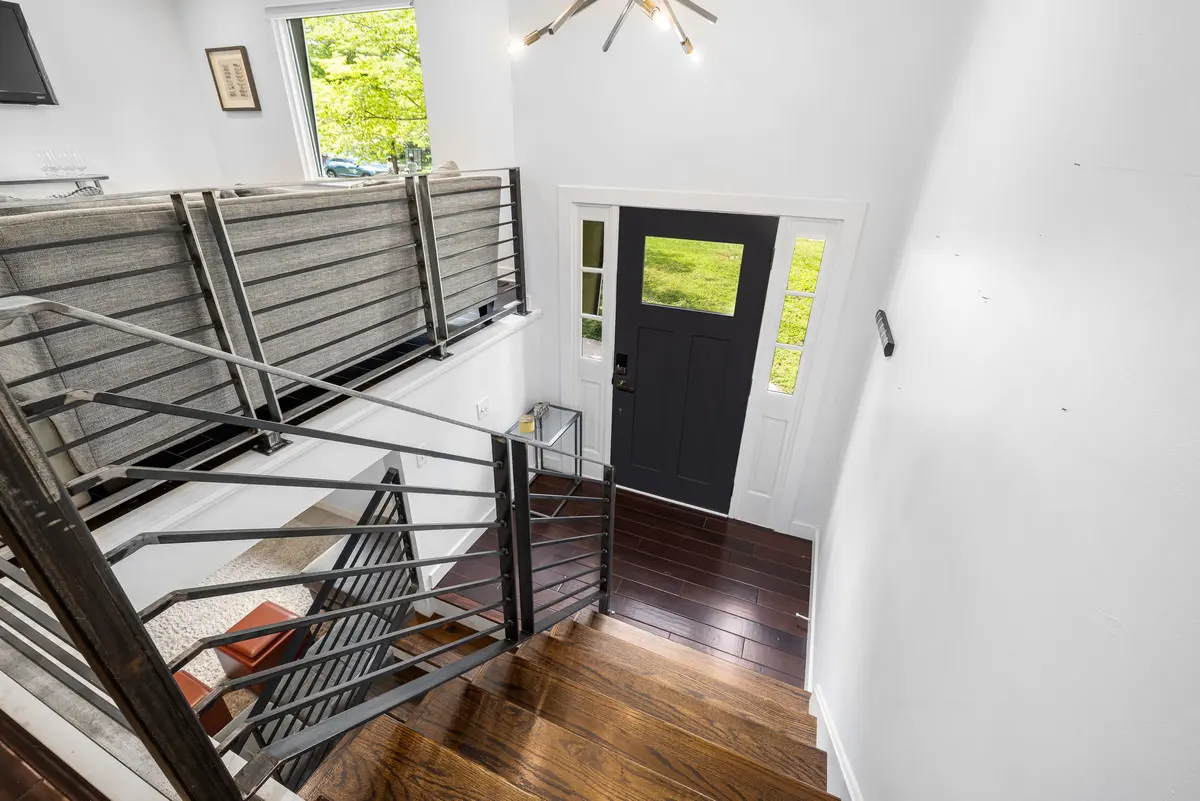
Stairs are their own discipline. Each tread and riser is fitted individually, the nosing has to be right for both grip and appearance, and the whole flight has to be consistent from top to bottom because the eye reads a staircase as a single object.

Cape Girardeau sees more of this than the flat towns, because the city is built on bluffs and split levels and walk-out basements are common there in a way they are not in Portageville or Matthews.
Transitions between rooms

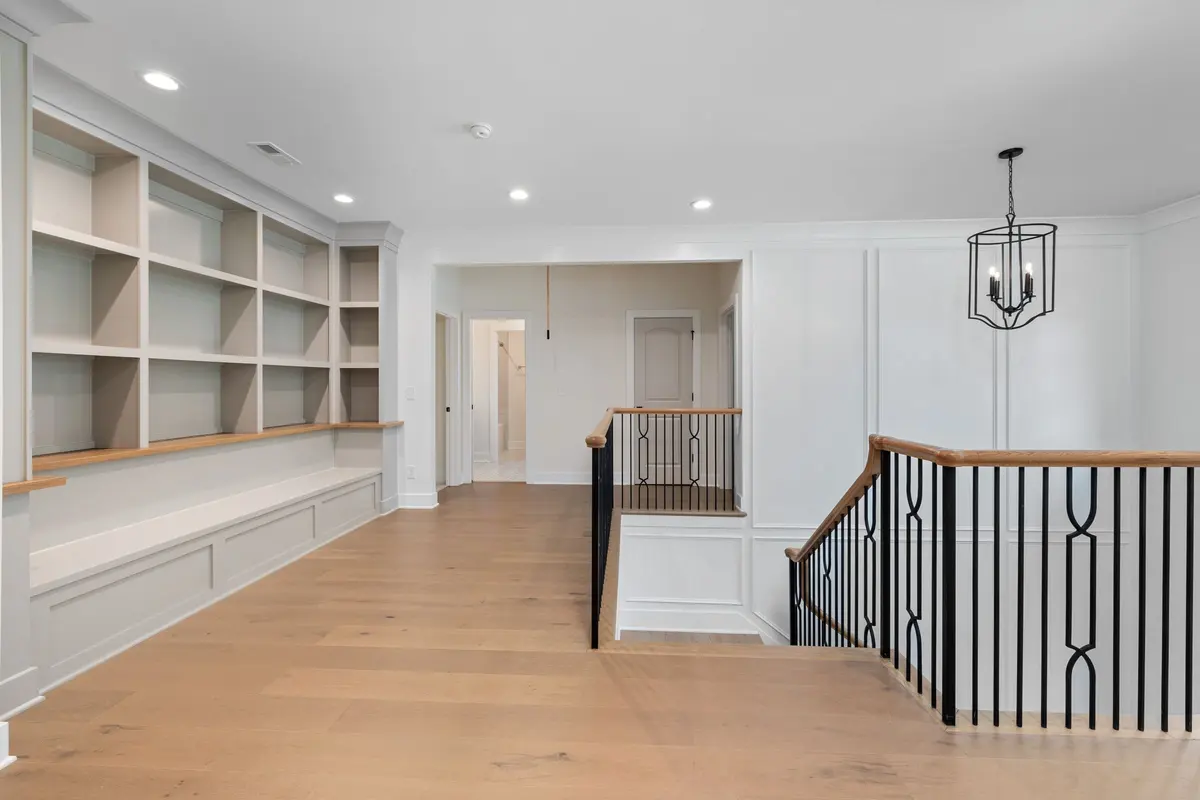
Wherever two floors meet, something has to happen. If they are at the same height it can be a simple T-moulding; if one is higher it needs a reducer sized to the actual difference. Ramping a transition with filler because the sizes did not match is where thresholds start to lift.

In Dexter this comes up constantly after the 2021 tornado, where rebuilt rooms meet original rooms and the two are rarely at the same height.

Matching what is already there

If you are doing part of a house rather than all of it, the new trim has to live alongside the old. Profiles get discontinued, so an exact match is not always possible.

We will tell you honestly whether we can match it, get close, or whether the better-looking answer is to re-run a whole elevation so the difference is deliberate rather than accidental.

Cozy stair treads and trim in a hallway
Recent installs

Stairs & Trim we've installed

  • Bright stair treads and trim in a stairs
  • Spacious stair treads and trim in a stairs
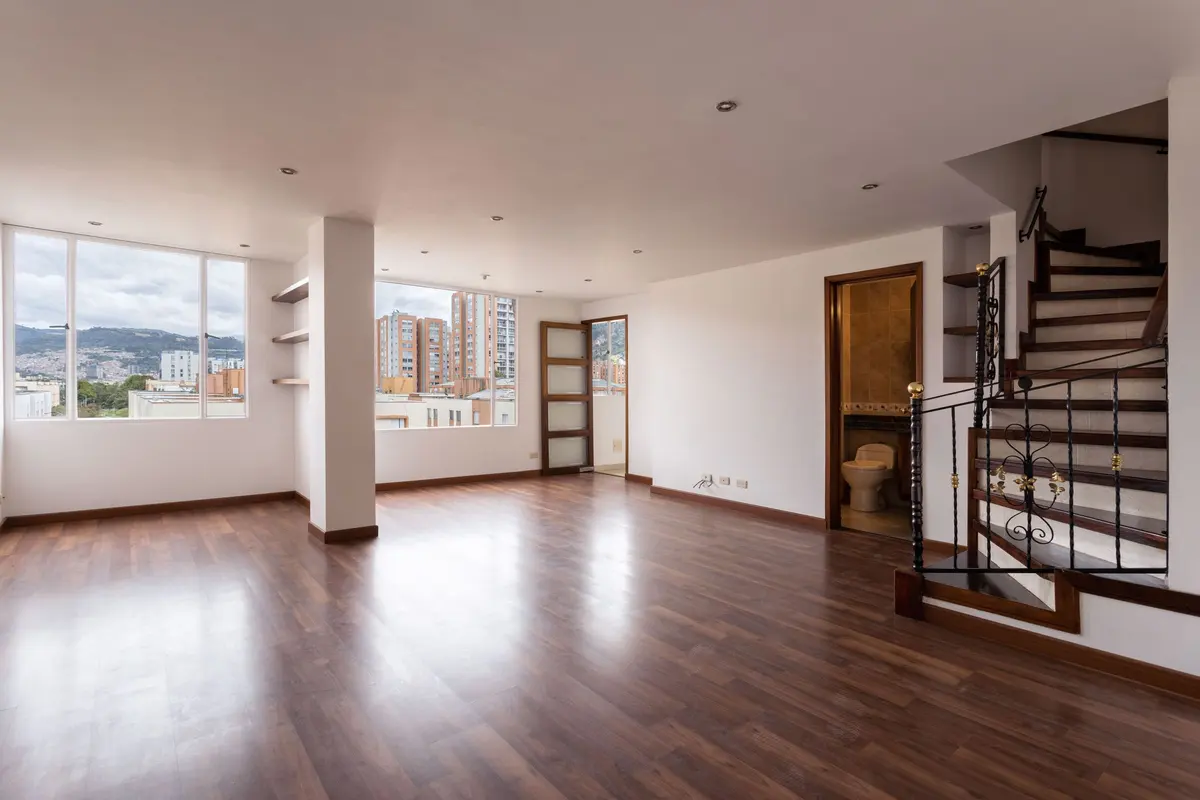
  • Bright stair treads and trim in a living room
How we do it

Coped, scribed and fastened where it will not show

  1. Coped inside corners

    A mitred inside corner opens up as the house moves through the seasons, and once it opens it never closes again. A coped joint — where one piece is cut to the profile of the other — stays tight because it is not relying on two angles agreeing forever.

    It takes longer than a mitre and it is the standard we work to on inside corners.

  2. Fasteners you should not be able to find

    Trim is fastened where the eye does not naturally land, and the holes are filled and finished so you have to look for them. A run of trim with a visible line of filled nail holes marching along it at eye height is a job that was finished in a hurry.

  3. Hiding the expansion gap

    Every floating floor needs a gap at the wall so it can move. Shoe mould and baseboard are what conceal it, and they are fastened to the wall rather than to the floor so the floor stays free to move underneath.

    Pinning the shoe down into the plank defeats the entire point and is a common cause of buckling. It is a small detail and it is the sort of thing that separates a floor that lasts from one that does not.

Trim is fastened where the eye does not naturally land, and the holes are filled and finished so you have to look for them.
Bright stair treads and trim
Stairs & Trim

Stairs & Trim questions

Can you do the stairs if we are only replacing the upstairs floors?

Yes, and it is usually a good idea to do them together. The staircase is read as one object, so a flight that does not relate to the floor at the top of it is very noticeable. We will price it either way so you can decide.

Can you match our existing baseboard?

Often. Profiles do get discontinued, so we will check what is available and tell you honestly whether it is an exact match, a close one, or whether re-running a whole elevation gives a better result than a near-miss.

Do we need new shoe mould, or can the old go back?

Sometimes it can, if it came off cleanly and is in good condition. Frequently it splits on removal or was painted in place, in which case putting it back looks worse than replacing it. We will tell you which yours is once it is off.

Why is there a gap under our shoe mould?

Deliberately, in most cases — a floating floor needs an expansion gap at the wall, and shoe mould hides it. The mould is fastened to the wall rather than the floor so the floor can still move. If the gap is visible, that is a fitting problem rather than a design one.

Ready for your free in-home estimate?

Free in-home estimate, clear pricing, and a crew that shows up when we say we will.

Call Now Free Estimate