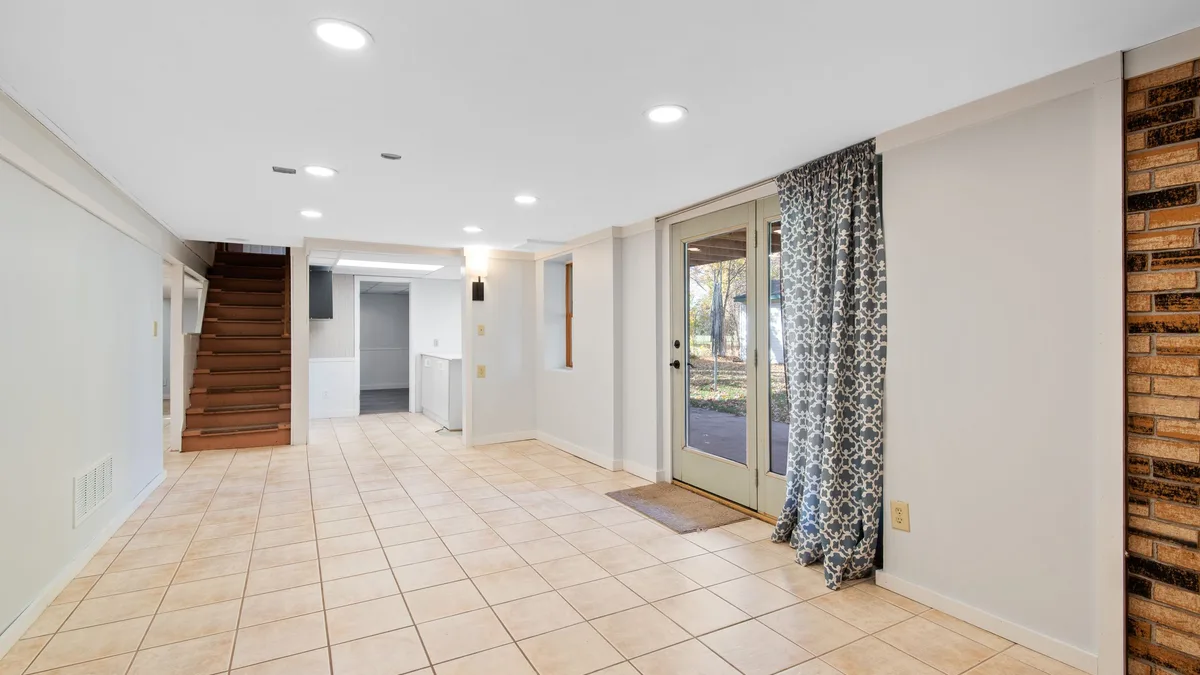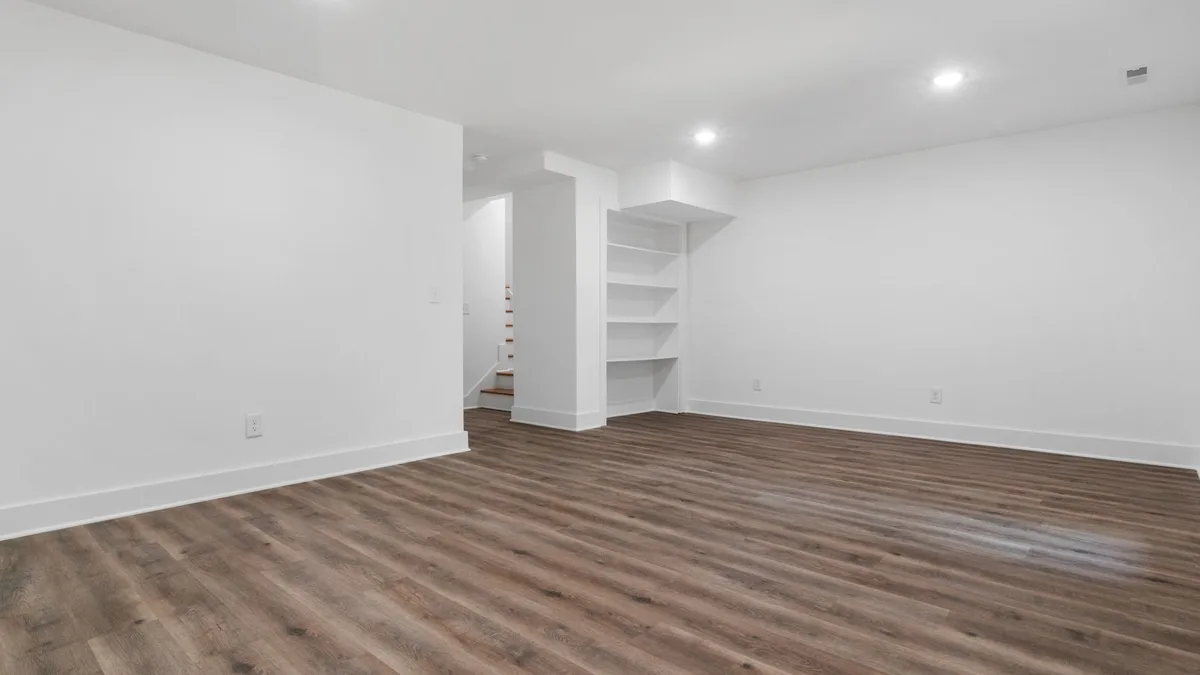
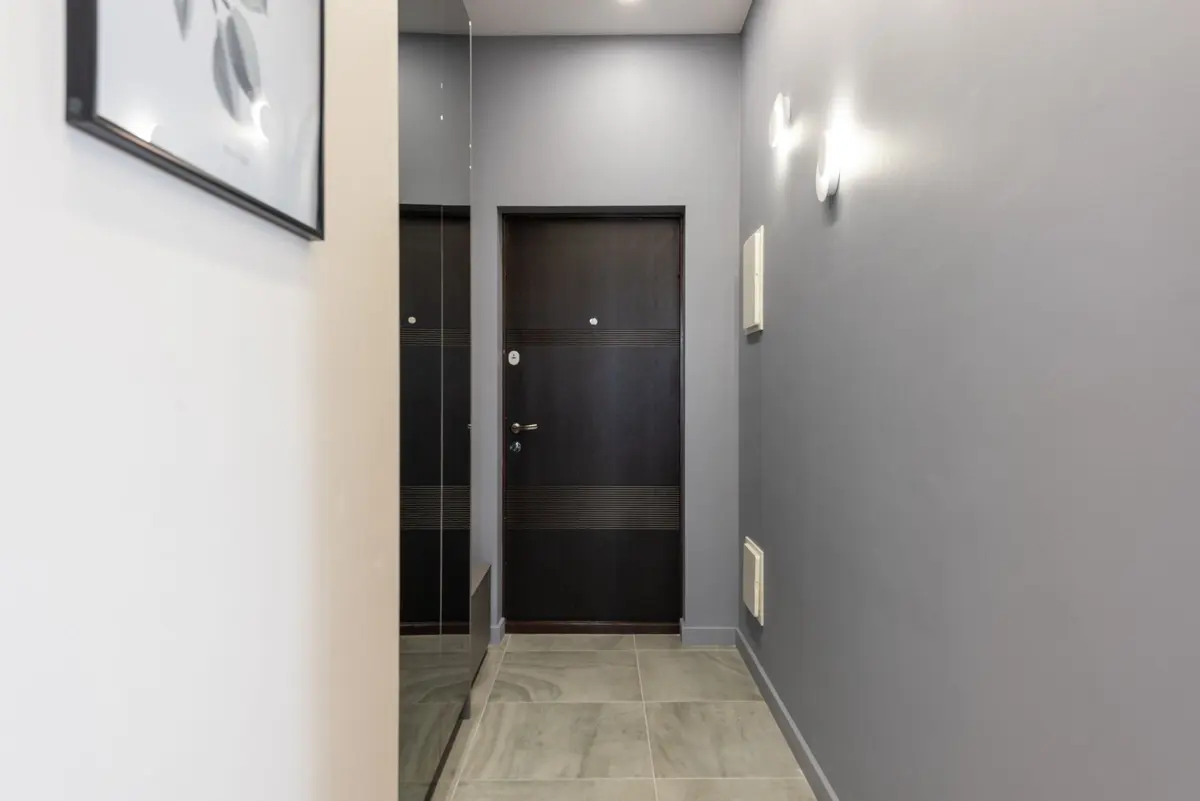
The few square feet inside the door take more punishment than any other part of the house. Every pair of boots, every wet dog and every grocery run crosses them, and they get the grit, the mud and the water first. In a lot of Bootheel houses the busiest door is not the front one at all. It is the back door or the door from the garage, often straight into a utility room or the kitchen.
Whatever goes down there has to handle all of that and still be easy to clean. Here is how the options compare, and what makes the difference beyond the choice of floor.
What an entry floor is up against
- Grit. Fine, sharp sand and soil walk in on shoes and get ground across the surface. It scratches hard floors and wears carpet flat.
- Water. Rain, snow on a cold morning, wet boots set down on the floor, and a dog that just came in from the yard.
- Mud. In spring and after a rain, plenty of it, especially in houses near the fields.
- Traffic. All of it. Every trip in and out crosses the same small patch.
So the best floors for an entry are hard, waterproof or close to it, and easy to clean with a damp mop.
Tile: the toughest
Porcelain tile is the most durable floor you can put at a door. It does not mind water, it does not scratch the way softer floors do, and done right it outlasts nearly everything else in the house. It is the classic choice for a mudroom for good reason.
It has a few catches:
- It needs a solid base. Tile is rigid, so a subfloor that flexes will crack it. Over a crawl space or an older wood subfloor, the prep under the tile is where most of the work goes. The subfloor decides the job explains why.
- It is cold and hard underfoot, and a dropped glass does not survive.
- Grout shows dirt. Choose a mid to darker grout color in an entry, not white, and ask whether the grout you are getting needs sealing.
- It takes longer. A tile floor has to set and be grouted, so the area is out of use for longer than with the other floors we install.
Luxury vinyl plank: the practical favorite
Luxury vinyl plank is the floor we recommend most often for entries, and it is what most families choose. The plank is waterproof, so wet boots and puddles do not hurt it. It is warmer and quieter than tile, it cleans with a damp mop, and a damaged plank can be replaced on its own. It also lets the entry floor run straight into the hallway, kitchen or living room as one continuous floor, which tile rarely does.
Grit is its main enemy. A good wear layer resists scratching well, but it is not invincible, so mats at the door matter more on vinyl than on tile. How to choose vinyl plank covers the wear layer and core questions that decide how it holds up.
Laminate: better kept away from the door
Laminate is a good floor in the right room, and it resists scratches well. But its core is wood-based, and water left standing at a door, from a wet boot, a dripping umbrella or a dog shaking off, can soak into the edges and swell the boards. A swollen board cannot be fixed, only replaced. At a front door that is rarely used and always dry it can be fine. At a back door or in a mudroom we would steer you to vinyl plank or tile. LVP or laminate in a Bootheel home compares the two in more detail.
Carpet: start it further in
Carpet right inside the door wears a gray path fast and holds onto the mud and water that come in with it. The usual answer is a hard floor at the entry, with the carpet starting a few steps in, often at the edge of the living room or the start of the bedroom hallway. How to care for carpet explains why stopping the grit at the door does so much for the carpet beyond it.
Do not let it get slick
A wet entry floor is where people slip. Whatever you choose, think about grip:
- Choose a matte or textured surface. A high-gloss tile or a very smooth plank can be slippery with wet shoes. Many tiles and planks have a textured or slip-resistant surface, and it is worth asking about it for the entry.
- Think about who uses the door. Older family members, small children and dogs on a smooth floor all deserve a surface with some texture. The best flooring for dogs and kids covers more of this.
Mats do half the work
The best entry floor in the world still benefits from good mats.
- Put one outside and one inside every busy door. The outside mat knocks off the mud, and the inside one catches the water and the fine grit.
- Make the inside mat big enough for a couple of full steps, not just one foot.
- Check the backing on vinyl. Some rubber and latex mat backings react with vinyl and leave a yellow or brown stain that will not clean off. Look for a mat that says it is safe for vinyl floors.
- Clean the mats. A mat full of grit just hands it to the next pair of shoes.
Where the floor should change
An entry floor has to meet something else, and where it does matters.
- At the door itself, a new floor sits higher than the old one, and an exterior door with little clearance can start to drag. We check that at the estimate, so trimming a door is planned rather than discovered.
- Between floors, put the change where it looks deliberate, usually under a door or at a natural opening, and use the right transition strip for the height difference. Tile next to carpet in particular needs some thought. Floor transitions and doorways covers the options.
- In a mudroom that is also a laundry room, the washer becomes part of the decision. Tile or vinyl plank for a bathroom or laundry room covers the overflow question.
Pick a color that forgives
The same rule as carpet applies here. A mid-tone floor that is close to the color of the dirt in your yard hides the most between cleanings. Very light floors show every muddy footprint, and very dark ones show dust, dried water spots and pet hair. A plank or tile with some variation in it hides more than a flat, uniform color.
See it at your own door
At a free in-home estimate we look at the door that actually gets used, check what is under the existing floor and how much room the door has to spare, and bring tile, plank and carpet samples so you can see them where they will go. Book one here or call 573-471-8700. We work out of our showroom on Virginia Street in Sikeston and across the area, including East Prairie, Matthews and Scott City.