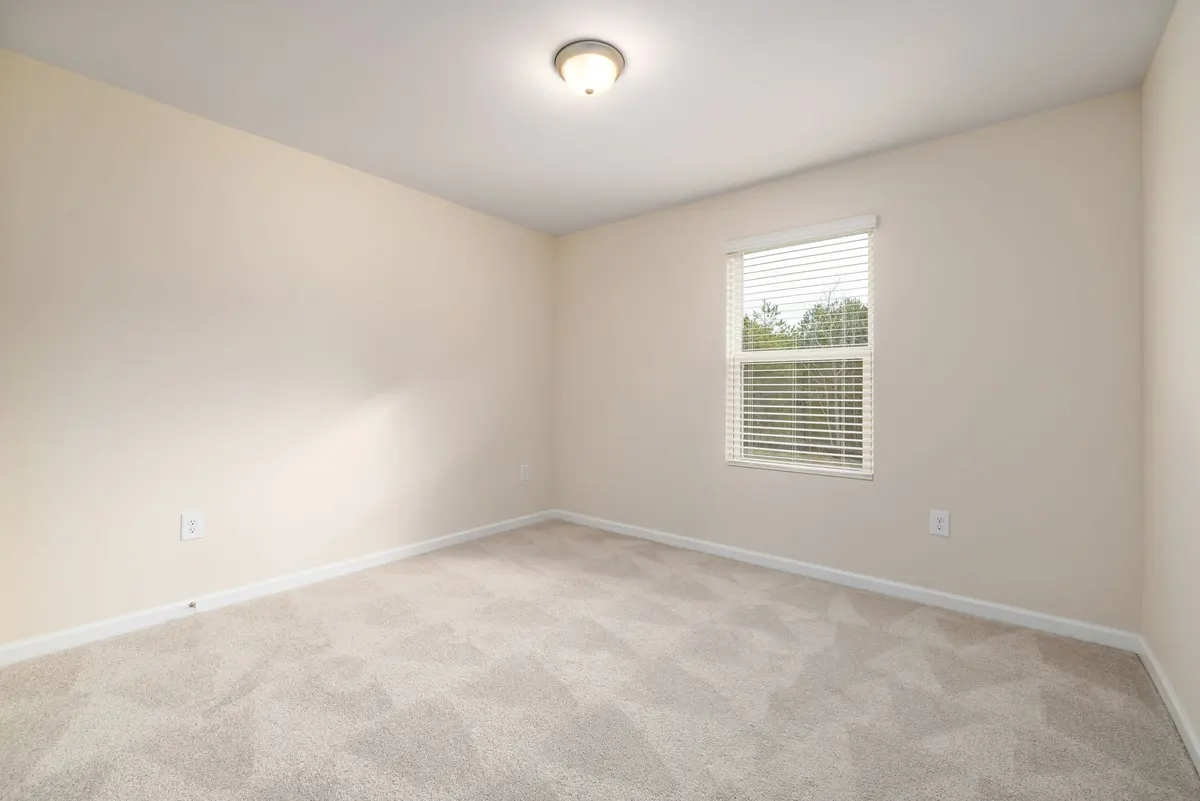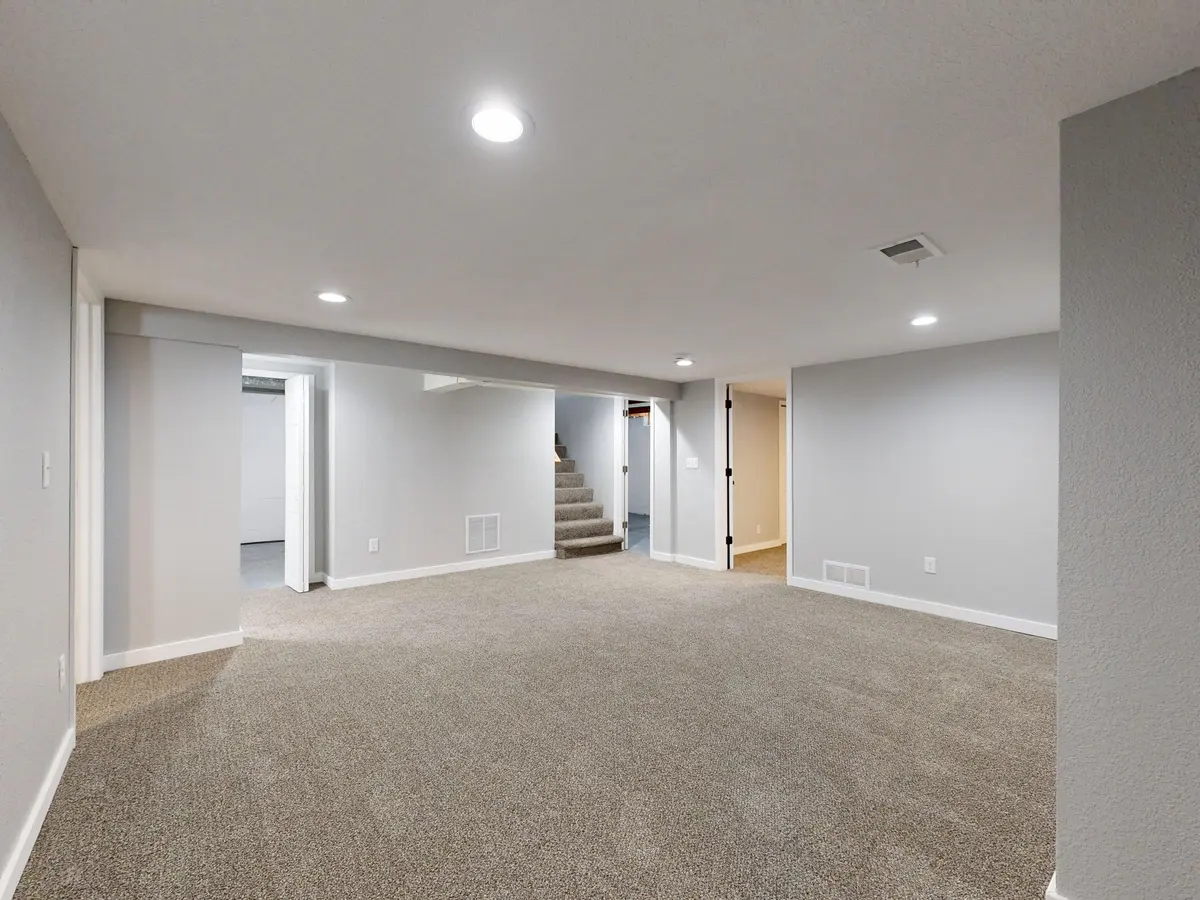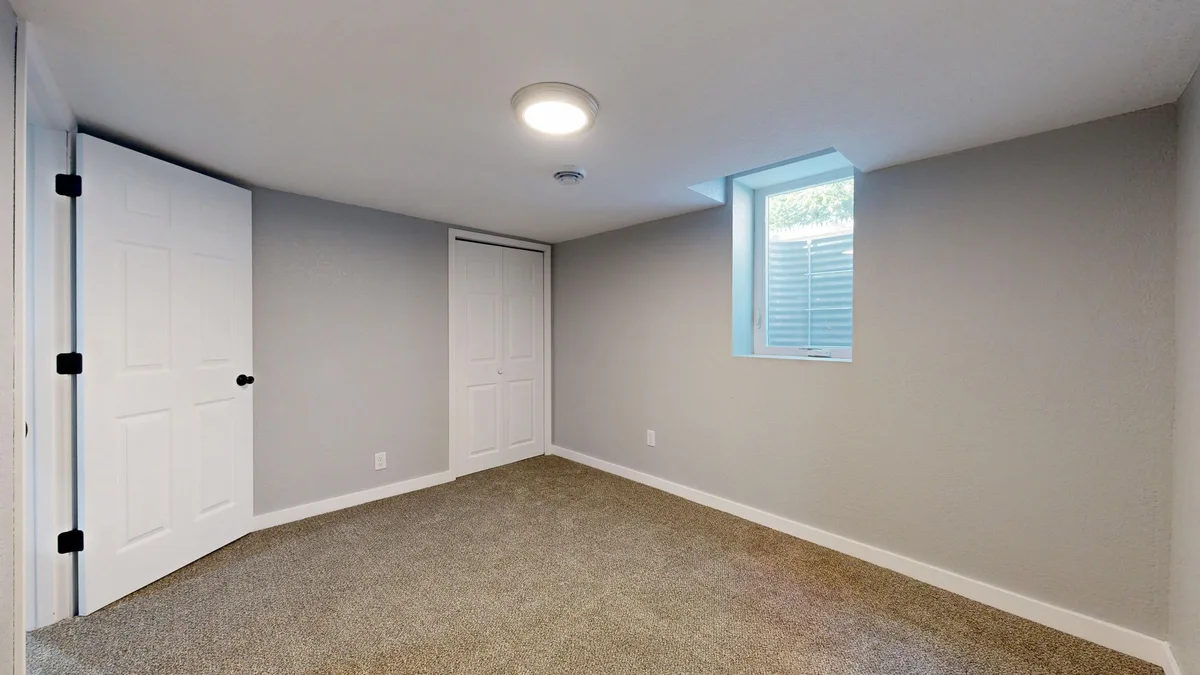
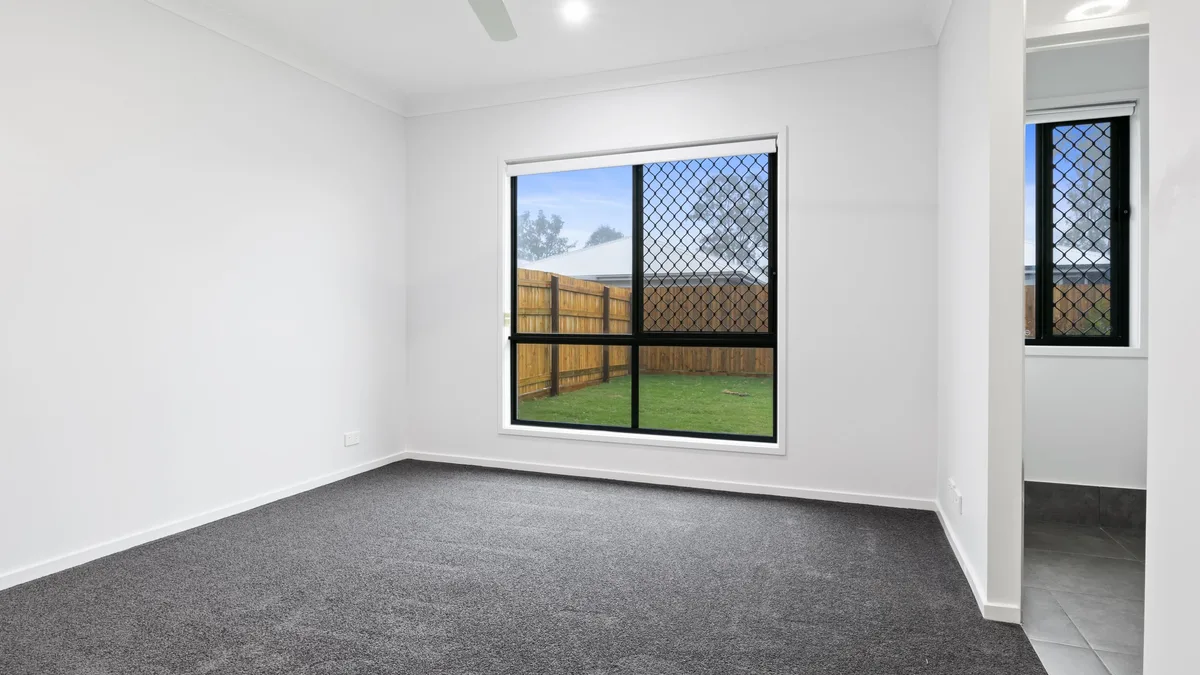
It is the question we get asked most, usually over the phone, usually by someone who wants to know whether one bedroom is worth calling about. It is, and the number is smaller than most people fear. But the number is built from parts, and once you know the parts you can read any quote and see what you are paying for. Here they are, in the order they appear on ours.
Start with the roll, not the room
Carpet comes on a 12-foot-wide roll. That single fact decides how much carpet you buy more than the size of the room does.
A 12-by-12 bedroom is one clean piece off the roll with a little trim. A 12-by-13 bedroom needs a second strip for that extra foot, which means a seam and an offcut you pay for but do not see. A 14-by-16 room is two pieces with a seam down the middle. The closet takes its own piece, and sometimes an offcut from the room fills it and sometimes it does not.
So when we measure a bedroom we are not calculating square feet. We are drawing the room against a 12-foot roll, deciding where the seam falls so it is under the bed rather than across the doorway, and adding up the pieces. That quantity, not the room's area, is what the carpet line is priced on. How to read a carpet sample covers the material side; this is the arithmetic side.
The carpet
Inside the carpet line, three things move the price: fiber, density and twist. Polyester is the value choice for a bedroom and a good one, because a bedroom is low traffic and polyester holds color and resists stains. Nylon costs more and recovers better under foot traffic, which matters in a hallway more than a bedroom. Density and twist, how tightly the tufts are packed and how firmly each one is twisted, predict how the carpet ages better than the thickness does.
For most bedrooms in Sikeston, a mid-grade polyester or a triexta on a good pad is where the value is. We bring both to the house so you can feel the difference rather than take our word for it.
The pad
The pad is a smaller line than the carpet and it decides more. It is what makes the carpet feel soft or thin underfoot, and it is what protects the carpet's backing from being ground against the subfloor. A thin, low-density pad compresses within a couple of years and takes the carpet with it.
We specify the pad to the room. A bedroom gets a thicker, softer pad than a hallway because comfort matters more than firmness there. It is the last place to save money, and reusing old pad, which is compressed and often stained on the underside, is a false economy every time.
Tear-out, tack strip and haul-away
The old carpet, the old pad and, if it is rusted or loose, the old tack strip come out. Staples get pulled. The subfloor gets looked at, because this is the only time anyone will see it, and a squeak or a soft spot is fixed now or never. Then everything goes in the truck and away.
All of that is part of the job with us, not an extra. What actually drives the price of a flooring job explains why we would rather have it on the estimate than discover it after the furniture is in the hallway.
The closet and the doorway
A closet is small and awkward and takes nearly as long per square foot as the room. The doorway needs a transition where the carpet meets the hallway floor, a metal or wood strip if the hallway is hard surface or a seam if it is carpet. Both are on the estimate as their own items so the number is complete.
Furniture
A bedroom has a bed, a dresser and whatever lives in the closet. We can usually handle normal bedroom furniture as part of the job; talk to us about it at the measure. Anything with a service connection, a waterbed or a gun safe needs arranging in advance. Getting your house ready for installation day covers what to do the week before.
Where the money actually goes
For a typical bedroom, the carpet is the largest share, then labor, then pad, then tear-out and haul-away, then the small items. That is why the carpet grade is the lever you control most. Going from a mid-grade to a premium carpet in one bedroom changes the total noticeably; going from a mid-grade to a budget carpet saves less than people expect and costs years of wear.
Where you can save without regretting it
- Do more than one bedroom at once if you were going to anyway. Setup and haul-away spread out, and offcuts from one room often fill the next closet.
- Pick a room size that lays out cleanly on the roll. A room a foot over 12 feet costs a seam and a strip; we will tell you when it does.
- Choose polyester over nylon in a low-traffic bedroom. The durability difference does not show where nobody walks much.
- Keep the carpet neutral. Solid mid-tones are made in larger runs and priced accordingly, and they do not date.
Where not to save
- The pad.
- The tear-out. Floating new carpet over old pad or skipping the subfloor look is how a job gets done twice.
- The stretch. Carpet should be power-stretched, not kicked in. Kicked-in carpet ripples in two summers of Bootheel humidity, and re-stretching costs what doing it right would have.
Getting the real number
There is no minimum with us. One bedroom is a normal job, and it is usually done in a morning. The estimate is free and it happens at your house, because the roll layout and the subfloor cannot be judged over the phone: we measure, draw the seams, look at what is under the old carpet, and leave you a written figure with every line on it. We bring the samples with us so you can see them in the room they are going in.
Book an estimate here or call 573-471-8700. We are on Virginia Street in Sikeston and cover Cape Girardeau, Dexter, New Madrid and the towns between.